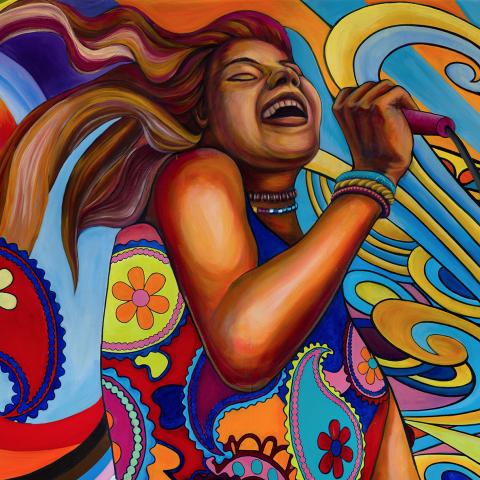
These lively discussion groups are quick to sell out for a reason! In the spirit of Great Wall of Los Angeles artist Judy Baca, this semester’s books form a mural of their own—fragmented, multi-voiced, and attentive to the people and stories history so often leaves off the wall.
Dates and Times
February–June 2027
GROUP 1: Tuesdays, 10:00 am–12:00 pm (IN PERSON)
February 16, March 16, April 13, May 18, June 15
GROUP 2: Tuesdays, 1:00–3:00 pm (IN PERSON)
February 16, March 16, April 13, May 18, June 15
GROUP 3: Wednesdays, 10:00 am–12:00 pm (IN PERSON)
February 17, March 17, April 14, May 19, June 16
GROUP 4: Wednesdays, 1:00–3:00 pm (IN PERSON)
February 17, March 17, April 14, May 19, June 16
GROUP 5: Fridays, 10:00 am–12:00 pm (ONLINE)
February 19, March 19, April 16, May 21, June 18
Pricing and Details
On sale Wednesday, November 18.
- $160 General
- $128 Members
5 sessions
Plan Your Visit
- Find out how to get here and where you can park for FREE.
- Learn about our shopping and dining options.
- See what else is going on during the day of your visit.
- Questions? Review our FAQs.
About the Class
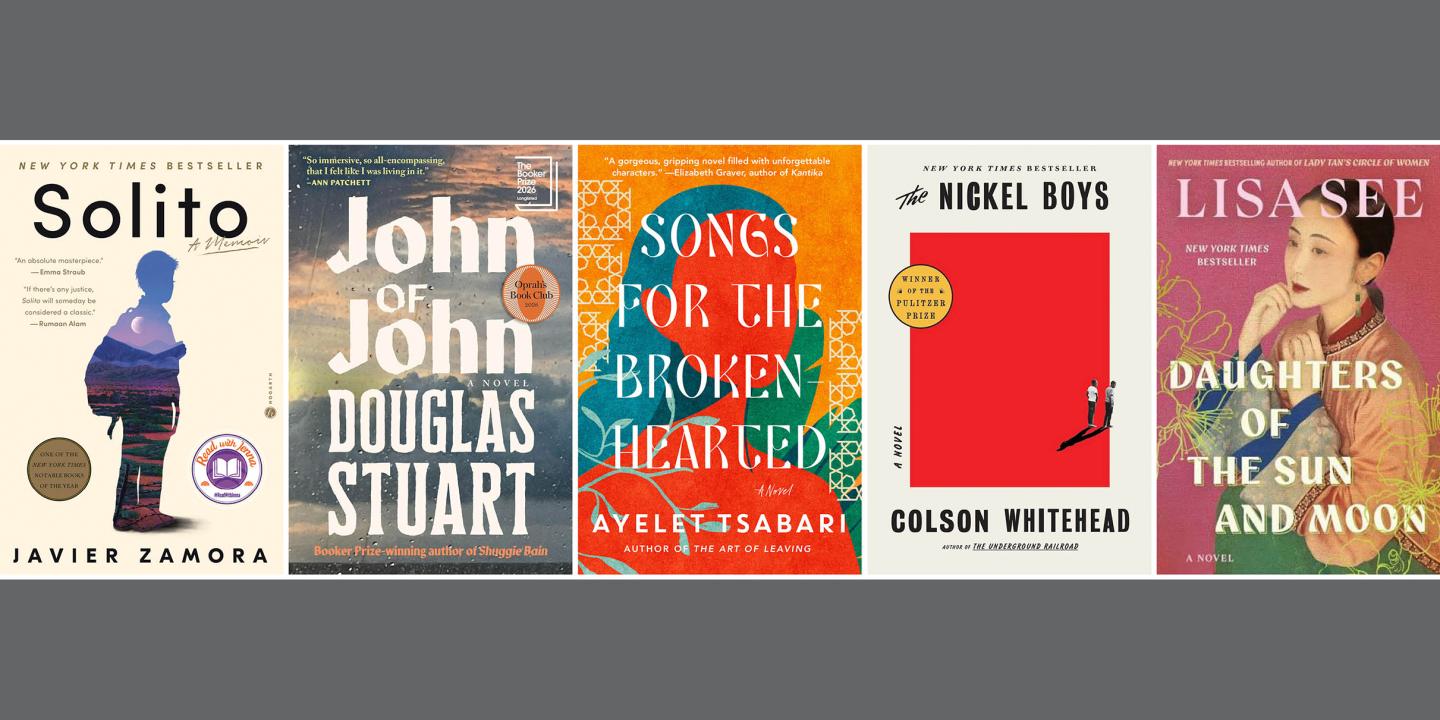
In this series, five outstanding contemporary novels invite us into worlds shaped by memory, injustice, longing, resilience, and human connection. Rich in emotional insight and literary accomplishment, these works resonate with the Skirball's core values of honoring memory, seeking learning, pursuing justice, building community, showing kindness, and welcoming the stranger. Together, they demonstrate the power of literature to deepen understanding, awaken empathy, and bring people into meaningful conversation with one another.
Artist Judy Baca has spent her career insisting that history belongs to everyone who lived it—not just those who got to write it down— by filling public walls with the faces of migrants, mothers, and communities that official memory tends to erase, and treating artmaking as a way of giving voice to the lives too often left out of the record. The books in this session do the same work in words.
FEBRUARY: Solito by Javier Zamora (2022)
(Los Angeles Times Book Prize, Finalist for the PEN/John Kenneth Galbraith Award for Nonfiction, Longlisted for the Andrew Carnegie Medal for Excellence and the PEN/Open Book Award)
Javier Zamora’s adventure is a three-thousand-mile journey from his small town in El Salvador, through Guatemala and Mexico, and across the U.S. border. He will leave behind his beloved aunt and grandparents to reunite with a mother who left four years ago and a father he barely remembers. Traveling alone amid a group of strangers and a “coyote” hired to lead them to safety, Javier expects his trip to last two short weeks. At nine years old, all Javier can imagine is rushing into his parents’ arms, snuggling in bed between them, and living under the same roof again. He cannot foresee the perilous boat trips, relentless desert treks, pointed guns, arrests and deceptions that await him; nor can he know that those two weeks will expand into two life-altering months alongside fellow migrants who will come to encircle him like an unexpected family. A memoir as gripping as it is moving, Solito provides an immediate and intimate account not only of a treacherous and near-impossible journey, but also of the miraculous kindness and love delivered at the most unexpected moments. Solito is Javier Zamora’s story, but it’s also the story of millions of others who had no choice but to leave home.
MARCH: John of John by Douglas Stuart (2026)
(Shortlisted for the Booker Prize)
Out of money and with little to show for his art school education, John-Calum Macleod takes the ferry back home to the Isle of Harris in the Outer Hebrides to find that little has changed except for him. He returns to the windswept croft and the two pillars of his childhood: his father John, a sheep farmer, tweed weaver, and lay preacher in the local Presbyterian church, and his maternal grandmother Ella, a profanity-loving Glaswegian whose steady warmth helped Cal weather the sudden departure of his mother. Cal privately wonders if any lonely men might be found on the barren hillsides of home, while John is dismayed by his son’s long hair, strange clothes, and seeming unwillingness to be Saved. But Cal isn't the only one in the croft house who is keeping secrets. As lambing season turns to shearing season, the threads holding together the community together become increasingly frayed, and nothing will remain as it was before. John of John is a singular novel about duty, passion, and the transformative power of the truth. It is a magnificent literary work that cements Douglas Stuart's reputation as one of our greatest novelists working today.
APRIL: Songs of the Brokenhearted by Aylet Tsabari (2024)
(Winner of the National Jewish Book Award's JJ Greenberg Memorial Award)
1950. Thousands of Yemeni Jews have immigrated to the newly founded Israel in search of a better life. In an overcrowded immigrant camp in Rosh Ha’ayin, Yaqub, a shy young man, happens upon Saida, a beautiful girl singing by the river. In the midst of chaos and uncertainty, they fall in love. But they weren’t supposed to; Saida is married and has a child, and a married woman has no place befriending another man.
1995. Thirty-something Zohara, Saida’s daughter, has been living in New York City—a city that feels much less complicated than Israel, where she grew up wishing that her skin was lighter, that her illiterate mother’s Yemeni music was quieter, and that the father who always favored her was alive. She hasn’t looked back since leaving home, rarely in touch with her mother or sister, Lizzie, and missing out on her nephew Yoni’s childhood. But when Lizzie calls to tell her their mother has died, she gets on a plane to Israel with no return ticket.
Soon Zohara finds herself on an unexpected path that leads to shocking truths about her family—including dangers that lurk for impressionable young men and secrets that force her to question everything she thought she knew about her parents, her heritage, and her own future.
MAY: The Nickel Boys by Colson Whitehead (2019)
(Winner of the Pulitzer Prize)
When Elwood Curtis, a black boy growing up in 1960s Tallahassee, is unfairly sentenced to a juvenile reformatory called the Nickel Academy, he finds himself trapped in a grotesque chamber of horrors. Elwood’s only salvation is his friendship with fellow “delinquent” Turner, which deepens despite Turner’s conviction that Elwood is hopelessly naive, that the world is crooked, and that the only way to survive is to scheme and avoid trouble. As life at the Academy becomes ever more perilous, the tension between Elwood’s ideals and Turner’s skepticism leads to a decision whose repercussions will echo down the decades. Based on the real story of a reform school that operated for 111 years and warped the lives of thousands of children, The Nickel Boys is a devastating, driven narrative that showcases a great American novelist writing at the height of his powers and “should further cement Whitehead as one of his generation's best"
JUNE: Daughters of the Sun and Moon by Lisa See (2026)
In 1870, three Chinese women arrive in the small, dusty, and violent pueblo of Los Angeles. Dove, the bound-footed daughter of an imperial scholar, is entrancing and innocent. These characteristics should bring her great rewards, beginning with her arranged marriage to a much older merchant. Petal, the big-footed daughter of peasants, has grown up hungry and with dirt between her toes. In a moment of desperation, Petal’s father sells her to buy money for rice seed, and she is loaded onto a ship to the Gold Mountain—America—where she is once again sold. Moon is married to a doctor of traditional Chinese medicine. She is educated, speaks fluent English, and has been endowed with a face of great beauty, yet her failed footbinding as a child has left her with a limp that lessens her value in the eyes of many. Each woman has her own desires. Dove wants to love and be loved, Petal desires freedom, and Moon seeks justice. Together they face a larger society that wishes them not one ounce of good will. Anti-Chinese sentiment is strong in Los Angeles, and this eventually leads to the Night of Horrors during which all three women are challenged in ways they could not have imagined. Brought together by hardship and heartbreak, they must use their bravery, endurance, and ability to “eat bitterness” to discover their voices, find freedom, and connect through solace and friendship. Together they are daughters of the sun and moon.
Facilitator: Stacey Bieber attended Boston University for both her undergraduate studies and law school. She also has a Master of Law degree in Taxation from New York University. Following graduate school, she and her husband, Mark, moved to Los Angeles for her clerkship and never looked back.
After having three children, Bieber decided to follow her passion and returned to school earning a Master of Arts in Literature from California State University, Northridge, where she taught in the English Department for eighteen years until recently retiring.
Facilitating book clubs allows Bieber to combine her love for reading, learning, and teaching without the grading. In addition to teaching, she loves spending time with her family, hiking, traveling, and learning from her students.
Dates and Times
GROUP 1: Tuesdays, 10:00 am–12:00 pm (IN PERSON)
February 16, March 16, April 13, May 18, June 15
GROUP 2: Tuesdays, 1:00–3:00 pm (IN PERSON)
February 16, March 16, April 13, May 18, June 15
GROUP 3: Wednesdays, 10:00 am–12:00 pm (IN PERSON)
February 17, March 17, April 14, May 19, June 16
GROUP 4: Wednesdays, 1:00–3:00 pm (IN PERSON)
February 17, March 17, April 14, May 19, June 16
GROUP 5: Fridays, 10:00 am–12:00 pm (ONLINE)
February 19, March 19, April 16, May 21, June 18
Related Exhibition
-
The 1960s—A Generation on Fire: Judy Baca’s Great Wall of Los Angeles
On view through February 28, 2027